
Onyx Bugett | TalkLife News
October 13, 2026 — Midday edition
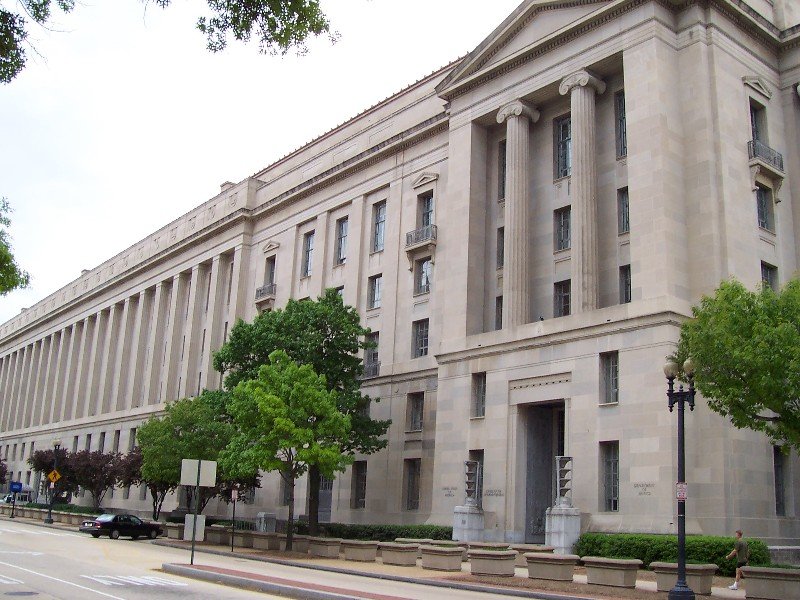
Archival photograph: Department of Justice Building, May 2005. Photographer: Ed Brown (Edbrown05), who released the image into the public domain. Image source and rights

A Reuters investigation published October 13 identified 85 public officials receiving Trump clemency after corruption-related charges or convictions across his two terms. Fifty-five were Republican officeholders and nine others supported his movement; four were known Democrats, with 17 affiliations undetermined. Reuters calculated 130 years of imprisonment and over $15 million in financial penalties avoided. The White House says Trump is remedying unjust prosecutions. Legal experts interviewed by Reuters warn of weakened accountability; that is their assessment, rather than proof of the motive behind every grant.
The findings raise two questions that are often combined in political debate: what a president is legally permitted to do, and how the public should evaluate the exercise of that authority. Broad power does not supply a complete explanation for each decision. A partisan pattern, by itself, does not establish every recipient’s individual circumstances.
The Justice Department’s clemency guidance makes an important distinction. A pardon is an act of presidential forgiveness and does not signify innocence. It can remove remaining punishment and certain legal disabilities, but it does not expunge the conviction. The conviction and the pardon remain on the record.
A commutation is different: it reduces a sentence without overturning the conviction. Those distinctions matter when a public figure presents clemency as proof that a prosecution was factually wrong. An overturned conviction, an acquittal and a pardon are different legal outcomes.
The department also explains that presidential clemency generally concerns federal offenses; the president cannot pardon a state conviction. People seeking relief for state offenses must use the relevant state process. Clemency can also be granted before conviction or sentencing.
Readers can inspect individual grants through the department’s public list, which links warrants and identifies offenses and sentences. Those records are a firmer basis for assessing a particular case than a social-media description alone.
The policy debate will continue over fairness, rehabilitation and public trust. Evaluating it responsibly requires keeping the grant itself, the original court outcome and the stated reasons for mercy separate. The new investigation supplies a pattern for scrutiny; it does not replace a case-by-case examination.