
Onyx Bugett | TalkLife News
Updated November 8, 2026 · News update · Developing

November 8 update: conflicting accounts require caution
Reuters reported November 8 that Iranian state television said no missile strikes had been confirmed after Qeshm-area explosions. Iran’s Revolutionary Guards Navy claimed two tankers hit mines and caught fire in Hormuz. Reuters could not independently confirm reported strikes. Those accounts do not establish a new U.S. offensive or connect the explosions to the Huda strike.
U.S. forces disabled the commercial cargo ship Huda in the Gulf of Oman on Saturday, November 7, after its crew repeatedly ignored warnings and tried to breach the American blockade of Iran, U.S. Central Command said. The account comes from the military that carried out the strike; the alleged violations have not been independently established here.
In its November 7 release, reproduced by Forth, CENTCOM identified the vessel as registered under the St. Kitts flag. It said a U.S. aircraft fired precision munitions into the ship’s stern after directing crew members to leave the areas being targeted. The ship had visited an Iranian port and was attempting to leave regional waters, the command said.
The release did not establish the crew’s condition. An instruction to leave targeted compartments should not be read as confirmation that everyone escaped injury. The shipowner’s account and a detailed damage assessment were not included.
A separate effort reaches beyond the sea blockade
Stars and Stripes reported November 7 that Admiral Brad Cooper also ordered the creation of Task Force Iron Gate, based in Tampa. CENTCOM described its mission as disrupting advanced weapons, dual-use technology, sanctioned materials and illicit revenue moving across Iran’s land borders and the Caspian Sea.
That announcement extends the stated enforcement effort beyond ocean shipping. It does not establish that the Huda carried weapons or that the new task force participated in the strike.
Why the waterway matters beyond the region
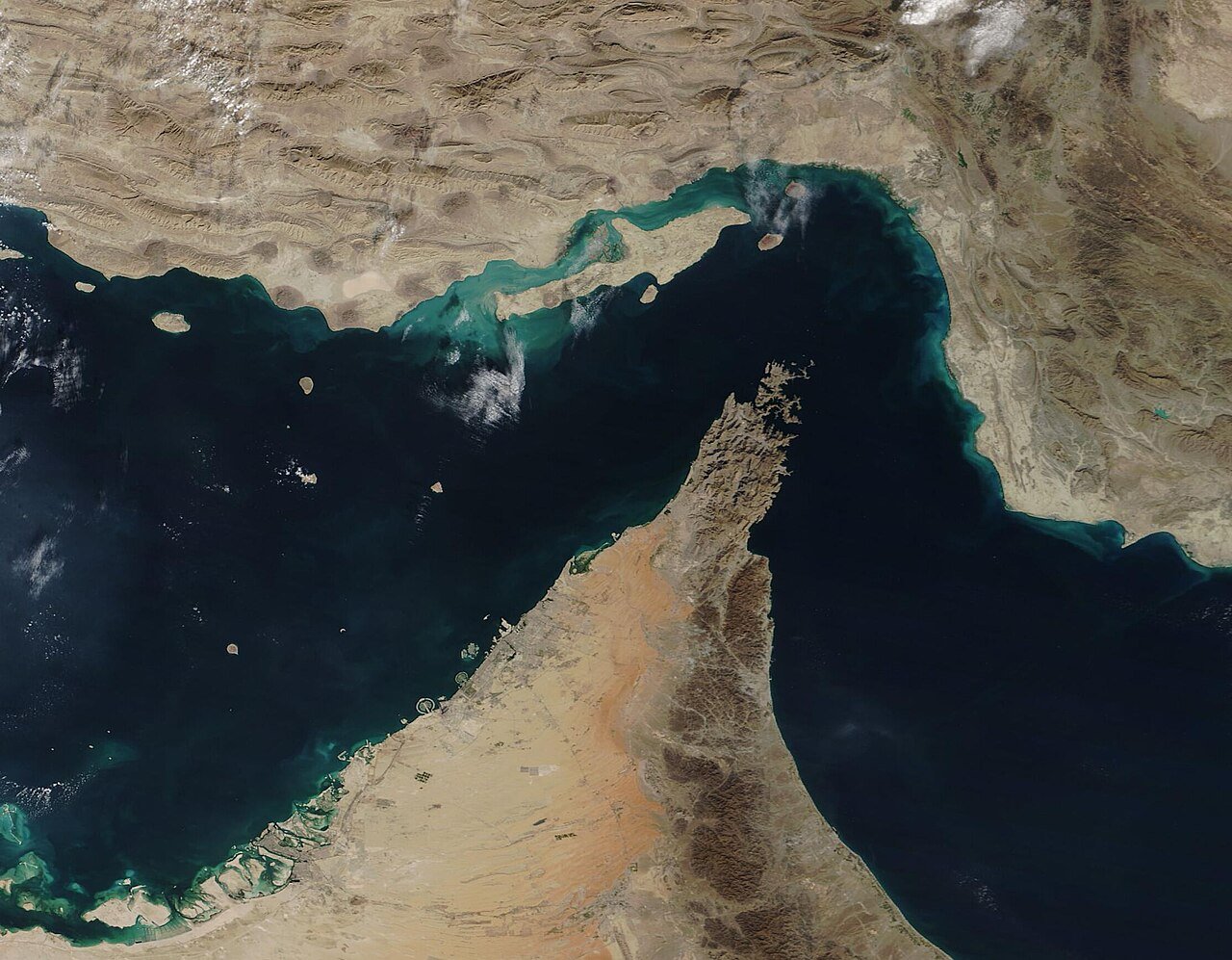
The nearby Strait of Hormuz connects the Persian Gulf with the Gulf of Oman and the Arabian Sea. The International Energy Agency’s February 2026 factsheet estimates that roughly 20 million barrels of crude oil and petroleum products passed through it daily in 2025—about a quarter of seaborne oil trade.
Those figures describe the route’s importance before this incident; they are not a measurement of today’s traffic. The IEA says alternative export routes are limited and prolonged disruption could affect world energy markets. That exposure makes crew safety and access to shipping consequential far beyond the Gulf, including for households and businesses buying fuel. This strike alone does not establish a new retail price increase.
Developing: Further verified information about the crew, vessel and circumstances of the strike may change this account.